Beyond Diets: Your Friendly Guide to Sustainable Nutrition for Lasting Fat Loss
Hey there, future you! Are you tired of the diet rollercoaster? The one where you restrict, lose weight, feel deprived, then bounce back even heavier? You're not alone. In a world saturated with quick fixes and extreme eating plans, it's easy to get lost and frustrated. But what if there was a better way? A sustainable, science-backed approach that helps you achieve lasting fat loss without sacrificing your sanity or your favorite foods entirely?
Welcome to the ultimate guide to sustainable nutrition for fat loss! We're ditching the deprivation mindset and embracing a friendly, evidence-based approach that empowers you to make informed choices, enjoy your food, and truly transform your body and health for the long haul. Get ready to build habits that stick and finally achieve the results you've been dreaming of. this excellent wellness product
Why Fad Diets Fail (And What Works Instead)
Before we dive into what does work, let's briefly touch on why so many popular diets fall short. Most fad diets promise rapid weight loss by severely restricting entire food groups or drastically cutting calories. While this might lead to initial drops on the scale, it's rarely sustainable. These diets often:
- Lead to nutrient deficiencies: Cutting out major food groups can leave your body lacking essential vitamins and minerals.
- Cause extreme hunger and cravings: Your body fights back against severe restriction, leading to rebound eating.
- Are socially isolating: It's hard to enjoy meals with friends and family when you have a long list of 'forbidden' foods.
- Are not enjoyable: If you hate what you're eating, you won't stick with it. Simple as that.
The solution? A shift in perspective. Instead of a temporary diet, think of it as a permanent lifestyle upgrade. Sustainable fat loss isn't about perfection; it's about consistency, smart choices, and finding joy in nourishing your body.
The Foundation: Calorie Deficit, Smartly Done
At its core, fat loss boils down to one fundamental principle: consuming fewer calories than your body burns – known as a calorie deficit. But don't let that intimidate you! This isn't about starvation; it's about intelligent eating. You want to create a deficit that's noticeable enough to encourage fat loss but not so severe that it leaves you feeling constantly hungry and depleted.
Think of your body as a car. If you put in less fuel than you burn driving, you'll eventually run out. For your body, the 'fuel' is calories, and 'running out' means tapping into stored energy (fat). The trick is to achieve this deficit through nutrient-dense foods that keep you full and satisfied, rather than relying on willpower alone.
Prioritize Protein: Your Satiety Secret Weapon
If there's one nutrient to champion for fat loss, it's protein. Protein is incredibly satiating, meaning it helps you feel fuller for longer, reducing the likelihood of overeating. It also has a higher thermic effect of food (TEF) compared to carbs and fats, meaning your body burns more calories digesting it. Plus, it's crucial for preserving lean muscle mass, which is vital for a healthy metabolism, especially when you're in a calorie deficit.
- Aim for 20-40 grams of protein per meal: Think lean meats (chicken, turkey, fish), eggs, Greek yogurt, cottage cheese, legumes, and protein supplements if needed.
- Start your day with protein: A protein-rich breakfast can set you up for success, curbing morning cravings.
Embrace Fiber: The Gut-Friendly Fullness Factor
Fiber is another powerhouse nutrient for sustainable fat loss. Found abundantly in fruits, vegetables, whole grains, and legumes, fiber adds bulk to your meals without adding many calories. It slows down digestion, helping you feel full and satisfied for longer. Soluble fiber, in particular, can form a gel-like substance in your gut, which further aids satiety and can help regulate blood sugar levels.
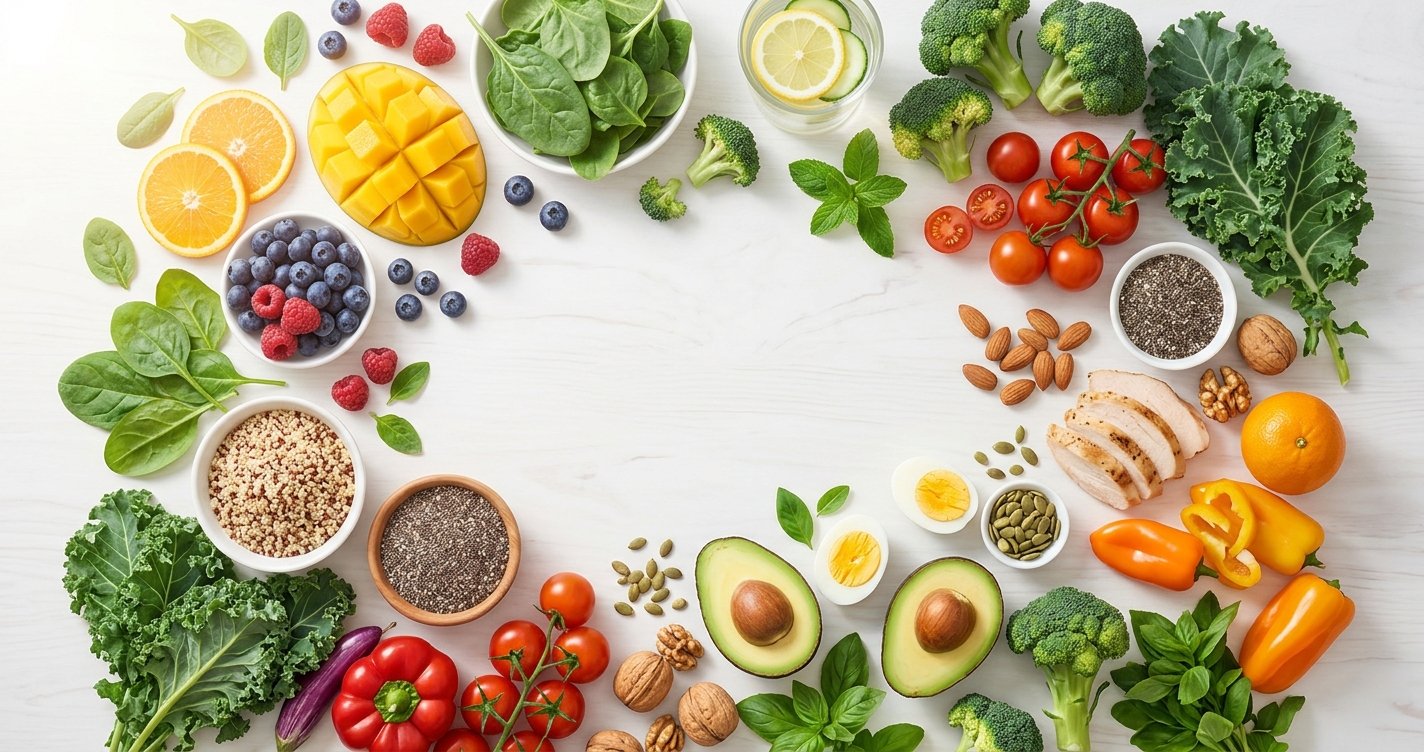
- Load up on veggies: Make non-starchy vegetables like broccoli, spinach, bell peppers, and kale the largest portion of your plate.
- Choose whole grains over refined: Opt for quinoa, oats, brown rice, and whole-wheat bread instead of white varieties.
- Don't forget fruits and legumes: Berries, apples, lentils, and beans are excellent fiber sources.
The Power of Whole Foods: Nourish, Don't Punish
When you focus on whole, unprocessed foods, you naturally reduce your intake of empty calories, added sugars, unhealthy fats, and artificial ingredients that often contribute to weight gain and hinder fat loss. Whole foods are packed with vitamins, minerals, antioxidants, and fiber – all essential for optimal health and sustainable fat loss.
Healthy Fats: Essential for Hormones and Satiety
Despite their calorie density, healthy fats are crucial for your overall health, hormone production, and satiety. Don't fear them! Incorporating sources of monounsaturated and polyunsaturated fats can help you feel more satisfied after meals, reduce inflammation, and support brain health.
- Good sources include: Avocados, nuts (almonds, walnuts), seeds (chia, flax, pumpkin), olive oil, and fatty fish (salmon, mackerel).
- Portion control is key: While healthy, fats are calorie-dense. A small handful of nuts or a tablespoon of olive oil is usually sufficient per serving.
Smart Carb Choices: Fuel Your Body Wisely
Carbohydrates are not the enemy! They are your body's primary energy source, especially important if you're active. The key is to choose complex carbohydrates over simple, refined ones. Complex carbs provide sustained energy, fiber, and nutrients, preventing energy crashes and intense cravings.
- Opt for: Sweet potatoes, brown rice, quinoa, oats, whole fruits.
- Limit: Sugary drinks, white bread, pastries, and highly processed snacks.
Hydration & Mindful Eating: Often Overlooked, Always Important
These two elements might seem minor, but they play a significant role in sustainable fat loss.
Stay Hydrated
Often, what we perceive as hunger is actually thirst. Drinking enough water throughout the day can help manage appetite, boost metabolism slightly, and aid in overall bodily functions. Aim for at least 8 glasses (around 2 liters) of water daily, and more if you're active.
- Drink water before meals: This can help you feel fuller and potentially eat less.
- Carry a water bottle: Make hydration a habit.
Practice Mindful Eating
Mindful eating is about paying attention to your food – its taste, texture, smell – and listening to your body's hunger and fullness cues. In our fast-paced world, we often eat distractedly, leading to overconsumption.
- Eat slowly: It takes about 20 minutes for your brain to register fullness.
- Chew thoroughly: Savor each bite.
- Eliminate distractions: Turn off the TV, put away your phone.
- Listen to your body: Eat when you're hungry, stop when you're comfortably full, not stuffed.
Meal Planning & Preparation: Your Roadmap to Success
Consistency is king in fat loss, and meal planning is your most powerful tool for consistency. By planning and preparing your meals ahead of time, you eliminate decision fatigue, reduce the likelihood of impulsive unhealthy choices, and ensure you have nutrient-dense options readily available.
- Plan your meals for the week: Decide what you'll eat for breakfast, lunch, dinner, and snacks.
- Create a grocery list: Stick to it to avoid unnecessary purchases.
- Batch cook: Dedicate a few hours one day a week (e.g., Sunday) to prep ingredients or full meals. Cook a large batch of chicken, roast a tray of vegetables, or prepare quinoa.
- Portion out meals: Use containers to pre-portion your lunches and snacks for easy grab-and-go options.
Patience, Persistence, and Self-Compassion: The Mental Game
Fat loss is a journey, not a race. There will be days when you feel discouraged, plateaus where the scale doesn't budge, and moments where you slip up. This is normal! What truly matters is how you respond to these challenges.
- Be patient: Sustainable fat loss takes time. Celebrate small victories and focus on long-term progress over immediate gratification.
- Be persistent: If you have an off day or week, don't throw in the towel. Get back on track with your next meal or workout.
- Practice self-compassion: Treat yourself with the same kindness and understanding you would offer a friend. Guilt and shame are counterproductive. Learn from your experiences and move forward.
- Track your progress: Beyond the scale, consider taking measurements, progress photos, and noting how your clothes fit or how your energy levels feel.
Your Sustainable Fat Loss Journey Starts Now!
You have the power to transform your health and achieve lasting fat loss by embracing sustainable nutrition principles. Ditch the restrictive diets and focus on nourishing your body with whole foods, prioritizing protein and fiber, staying hydrated, and eating mindfully. Couple these strategies with smart meal planning and a healthy dose of patience and self-compassion, and you'll be well on your way to not just losing fat, but keeping it off for good.
Remember, this isn't about perfection; it's about progress. Every small, consistent step you take builds momentum towards a healthier, happier you. You've got this!