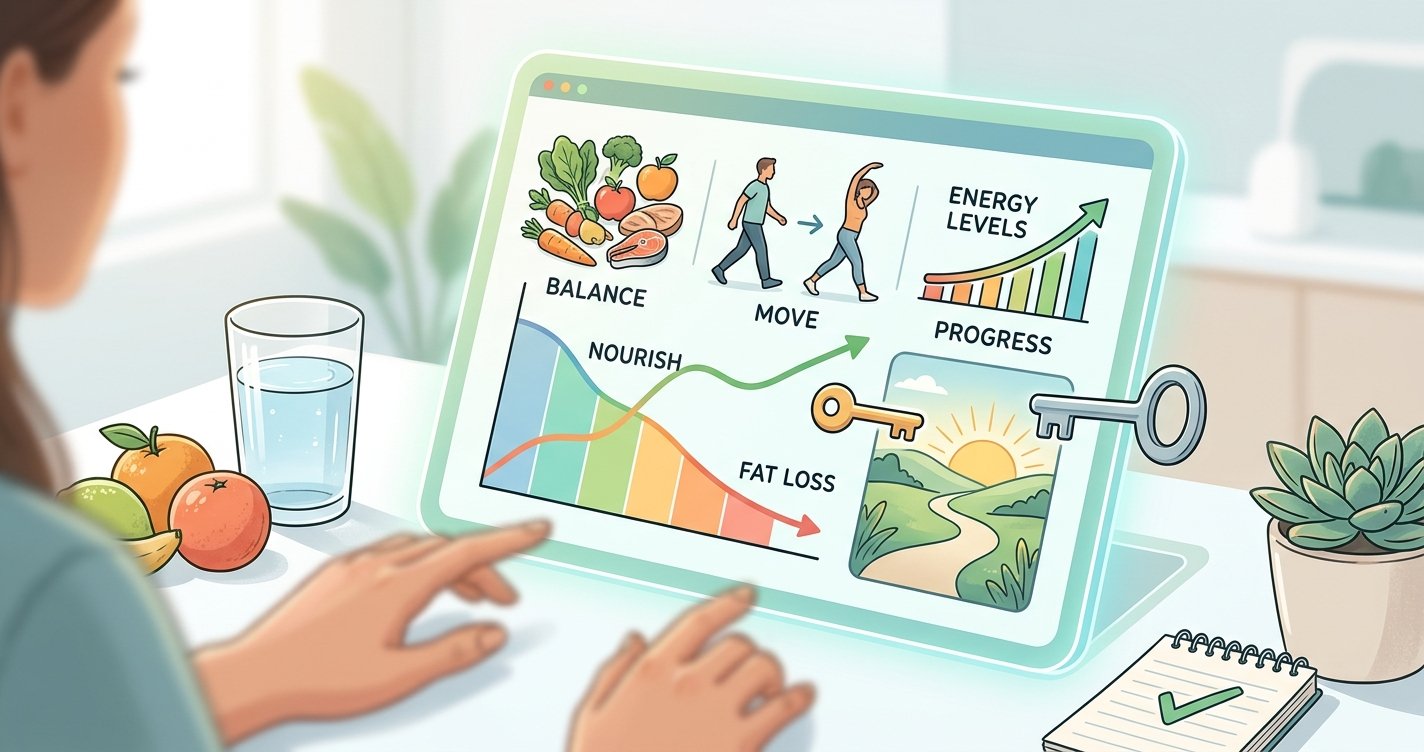
Ever felt like you're caught in a never-ending cycle of diet trends, only to end up right where you started – or even a little heavier? You're not alone. The world of fat loss is often shrouded in mystery, fads, and conflicting advice. But what if we told you there's one fundamental principle that underpins virtually every successful fat loss journey? It’s not a magic pill, a restrictive cleanse, or an extreme workout. It’s the humble, yet powerful, calorie deficit.
Don't let the technical term intimidate you. Think of a calorie deficit not as deprivation, but as smart energy management. It's the cornerstone of effective, sustainable fat loss, and understanding it is your golden ticket to finally achieving and maintaining your body composition goals. In this friendly, evidence-based guide, we're going to demystify the calorie deficit, show you how to implement it without feeling starved, and empower you to build lasting, healthy habits. this excellent wellness product
What Exactly *Is* a Calorie Deficit? (And Why It Matters for Fat Loss)
At its core, a calorie deficit is simple: it means consuming fewer calories than your body burns each day. Your body needs energy (calories) for everything it does – from breathing and thinking to walking, exercising, and even digesting food. This total energy expenditure is often referred to as your Total Daily Energy Expenditure (TDEE).
- If you eat more calories than your TDEE, your body stores the excess energy, usually as fat.
- If you eat fewer calories than your TDEE, your body has to tap into its stored energy reserves (like body fat) to make up the difference. This is where fat loss happens!
It’s a fundamental law of thermodynamics, and while hormones, genetics, and metabolism play a role in how efficiently this process occurs, the energy balance equation remains constant. No matter what diet you follow – keto, paleo, low-carb, high-carb – if you're losing fat, you are, by definition, in a calorie deficit.
The Myth of "Fad Diets" vs. The Power of Consistency
Many popular diets gain traction by creating a calorie deficit through restrictive rules (e.g., cutting out entire food groups, specific meal timings). While they might lead to initial weight loss, they often fail in the long run because they are unsustainable and don't teach you the underlying principles of energy balance. Once people stop the restrictive diet, they often revert to old habits, and the weight comes back.
Our goal isn't just weight loss; it's sustainable fat loss and building healthy habits for life. This means understanding *why* a calorie deficit works and learning how to create one in a way that fits your lifestyle, keeps you nourished, and doesn't feel like a punishment. Consistency, not perfection, is the secret ingredient here.
How to Calculate Your Calorie Needs (No Math Degree Required!)
Estimating your TDEE is the first step towards creating an effective calorie deficit. While precise measurements require lab tests, excellent online calculators can give you a very good starting point.
Understanding Your BMR and TDEE
Your Basal Metabolic Rate (BMR) is the number of calories your body burns at rest, just to maintain basic bodily functions. Your TDEE builds on your BMR by adding calories burned through physical activity (exercise, walking, fidgeting) and the thermic effect of food (digesting meals).
Here’s a simple way to get started:
- Use an Online TDEE Calculator: Search for "TDEE calculator" online. You'll typically enter your age, gender, height, weight, and activity level. These calculators use formulas (like Mifflin-St Jeor or Harris-Benedict) to estimate your TDEE.
- Set a Realistic Deficit: Once you have your estimated TDEE, aim to subtract 300-500 calories per day. This creates a moderate deficit that is generally safe, effective, and sustainable for most people. A 500-calorie deficit per day theoretically leads to about one pound of fat loss per week (since one pound of fat contains roughly 3,500 calories).
Important Note: This is a starting point. Your metabolism can adapt, and your activity levels might change. Be prepared to adjust your intake as your body changes and your fat loss progresses.
Smart Strategies to Create Your Deficit (Without Feeling Starved)
Creating a calorie deficit doesn't mean eating tiny portions of bland food. It's about making smarter, more nutrient-dense choices that keep you full and satisfied.
Prioritize Protein and Fiber
- Protein: It's the most satiating macronutrient, meaning it keeps you feeling fuller for longer. It also has a higher thermic effect (your body burns more calories digesting protein than carbs or fat) and helps preserve muscle mass during fat loss. Aim for 0.7-1 gram of protein per pound of body weight.
- Fiber: Found in fruits, vegetables, whole grains, and legumes, fiber adds bulk to your meals, slows digestion, and helps you feel full. It's also fantastic for gut health!
Hydration is Key
Often, what we perceive as hunger is actually thirst. Drinking plenty of water throughout the day can help manage appetite, boost metabolism slightly, and keeps your body functioning optimally. Try having a glass of water before each meal.
Mindful Eating Practices
Slow down! Pay attention to your food, savor each bite, and listen to your body's hunger and fullness cues. Eating mindfully can help you recognize when you're truly satisfied, preventing overeating. Avoid distractions like TV or your phone during meals.
Smart Snacking Choices
If you need snacks, choose wisely. Opt for protein and fiber-rich options like Greek yogurt, a handful of nuts, apple slices with peanut butter, or vegetable sticks with hummus. These provide sustained energy and satiety, unlike sugary, processed snacks.
Don't Forget Movement
While diet is paramount for a calorie deficit, increasing your physical activity helps burn more calories, contributing to your TDEE. This doesn't mean hours of grueling cardio. Incorporate more walking, take the stairs, stand more, and definitely include strength training. Building muscle boosts your metabolism, making fat loss easier in the long run.
The Pitfalls to Avoid (And How to Stay Motivated)
Even with the best intentions, fat loss can be tricky. Here are some common traps and how to navigate them:
Going Too Low Too Fast
An extreme calorie deficit (e.g., less than 1200 calories for women, 1500 for men, without medical supervision) is counterproductive. It can lead to nutrient deficiencies, muscle loss, metabolic slowdown, extreme hunger, and eventual rebound weight gain. Aim for a moderate, sustainable deficit.
Ignoring Nutrient Density
Don't just focus on calorie numbers; focus on the quality of your calories. A cookie might have the same calories as an apple and a handful of almonds, but the latter provides far more vitamins, minerals, and fiber, keeping you healthier and fuller.
The "All or Nothing" Mindset
One slip-up doesn't ruin your entire diet. If you overeat at one meal, simply get back on track with your next meal. Don't let perfection be the enemy of progress. Flexibility and consistency are far more powerful than strict adherence followed by giving up.
Overestimating Exercise Calories
Many fitness trackers and machines overestimate calories burned during exercise. Don't rely solely on these numbers to justify eating back all your "burned" calories. Focus on your initial TDEE estimate and adjust based on actual progress.
Beyond the Scale: Measuring Progress Holistically
The scale is just one tool, and it doesn't tell the whole story. Weight fluctuates daily due to water retention, sodium intake, and bowel movements. Don't let daily scale readings dictate your mood or motivation.
Instead, focus on these non-scale victories:
- Measurements: Track your waist, hips, arms, and thighs. These often show progress even when the scale doesn't budge.
- How clothes fit: Are your clothes feeling looser? That's a fantastic sign!
- Energy levels: Do you have more energy throughout the day?
- Strength and fitness: Are you getting stronger in your workouts? Can you walk further?
- Body composition photos: Take pictures every 4-6 weeks to visually track changes.
- Overall mood and confidence: Notice improvements in your mental well-being.
Embrace the Journey: Your Sustainable Path to Fat Loss
Understanding and implementing a calorie deficit is not about deprivation; it's about empowerment. It's about taking control of your energy balance, making informed food choices, and building habits that support your health and well-being for the long haul. Remember, fat loss is a journey, not a race. There will be ups and downs, but with patience, consistency, and an evidence-based approach, you absolutely can achieve lasting results.
Start small, be consistent, and celebrate every victory along the way. Your body will thank you, and you'll build a healthier, stronger you!
Disclaimer: Always consult with a healthcare professional or registered dietitian before making significant changes to your diet or exercise routine, especially if you have underlying health conditions.