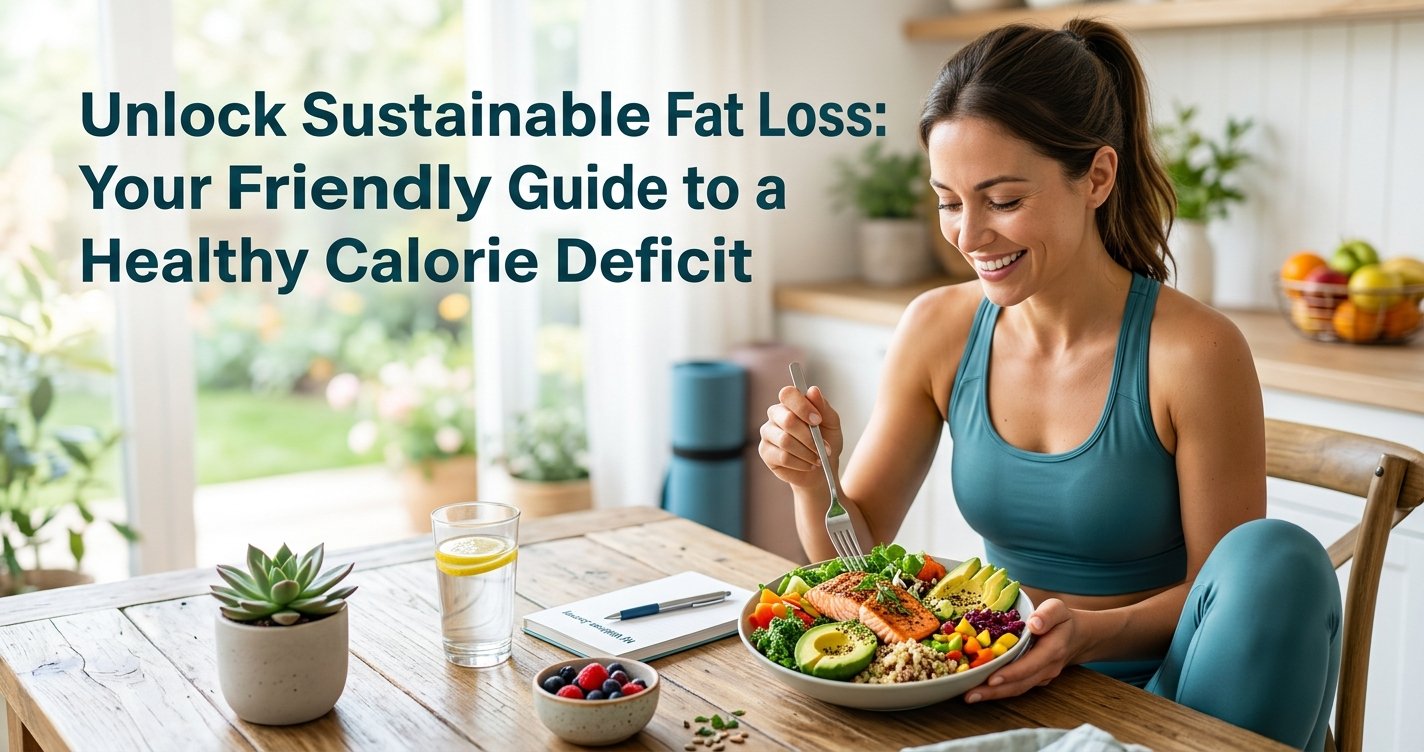
Feeling overwhelmed by the endless stream of quick-fix diets and extreme workout plans promising rapid fat loss? You’re not alone! Many people embark on their fat loss journey with enthusiasm, only to hit a wall of frustration, restrictive eating, and ultimately, unsustainable results. The truth is, genuine, lasting fat loss isn’t about deprivation or magic pills; it’s about understanding your body’s energy needs and creating a sustainable, healthy calorie deficit. This isn’t a diet that starts and ends; it’s a lifestyle shift that empowers you to achieve your goals and maintain them for good.
In this guide, we’re going to demystify the concept of a calorie deficit, explore why sustainability is your secret weapon, and equip you with practical, evidence-based strategies to make your fat loss journey enjoyable and effective. Say goodbye to the yo-yo cycle and hello to a healthier, happier you! this excellent wellness product
What Exactly Is a Calorie Deficit? (And Why It Matters)
At its core, a calorie deficit is simple physics: to lose fat, you need to consume fewer calories than your body burns. Think of your body as a car. If you put in less fuel than it uses to drive, it will eventually start tapping into its stored fuel reserves – and for humans, those reserves are primarily body fat.
Every day, your body burns calories just to keep you alive (your Basal Metabolic Rate or BMR), plus additional calories for digestion, movement, and exercise (Non-Exercise Activity Thermogenesis or NEAT, and Exercise Activity Thermogenesis or EAT). The total of all these is your Total Daily Energy Expenditure (TDEE). When your calorie intake is consistently lower than your TDEE, your body is forced to use stored energy (fat) for fuel, leading to fat loss. It’s the fundamental principle, and there’s no way around it.
The Pitfalls of Extreme Deficits: Why Less Isn't Always More
It might seem logical: if a small deficit causes fat loss, a huge deficit will cause even faster fat loss, right? Not necessarily! While extreme calorie restriction can lead to rapid initial weight loss, it often comes with significant downsides that sabotage long-term success:
- Muscle Loss: When calories are too low, your body might start breaking down precious muscle tissue for energy, not just fat. Losing muscle slows your metabolism, making it harder to maintain weight loss later.
- Metabolic Adaptation: Your body is smart! If it senses prolonged starvation, it can adapt by slowing down your metabolism to conserve energy, making further fat loss incredibly difficult.
- Nutrient Deficiencies: Severely restricting food groups can lead to inadequate intake of essential vitamins, minerals, and macronutrients, impacting your health, energy levels, and overall well-being.
- Unbearable Hunger & Cravings: Extreme deficits are incredibly hard to sustain mentally and physically. Constant hunger and overwhelming cravings often lead to binge eating and eventually, giving up.
- Energy & Mood Dips: Feeling lethargic, irritable, and unfocused are common side effects of eating too little, making it harder to stick to your plan and enjoy life.
The goal isn't to crash diet; it's to create a deficit that your body and mind can comfortably sustain over time.
Finding YOUR Sweet Spot: How to Calculate a Sustainable Calorie Deficit
So, how do you find that perfect balance? Here’s a practical approach:
1. Estimate Your Total Daily Energy Expenditure (TDEE)
Online TDEE calculators are a great starting point. They factor in your age, sex, weight, height, and activity level to give you an estimate of how many calories you burn daily. Remember, these are estimates, not exact figures, but they provide a good baseline.
2. Create a Moderate Deficit
For sustainable fat loss, aim for a deficit of 250-500 calories below your estimated TDEE. This typically results in a healthy and manageable fat loss of 0.5-1 pound per week. A 500-calorie deficit means you’ll lose roughly 1 pound of fat per week (since 3,500 calories roughly equals one pound of fat).
3. Track & Adjust
For a week or two, try tracking your food intake using an app (like MyFitnessPal or LoseIt!) to get an accurate picture of your current eating habits. Monitor your weight and how you feel. If you’re not losing weight after a couple of weeks, you might need to slightly reduce your calories further (e.g., by another 100-200 calories). If you feel overly hungry or tired, you might need to slightly increase them. Listen to your body!
Beyond the Numbers: Strategies to Make Your Deficit Feel Effortless
While the calorie deficit is paramount, it’s not just about eating less; it’s about eating smarter. These strategies help you feel full, satisfied, and energized even while in a deficit:
1. Prioritize Protein
Protein is your best friend for fat loss! It’s highly satiating, meaning it keeps you feeling fuller for longer, which reduces snacking and overeating. Furthermore, adequate protein intake is crucial for preserving muscle mass while you lose fat, which helps maintain a healthy metabolism. Aim for 0.7-1 gram of protein per pound of your target body weight.
2. Load Up on Fiber-Rich Foods
Fruits, vegetables, whole grains, and legumes are packed with fiber. Fiber adds volume to your meals without adding many calories, helping you feel full. It also aids digestion and stabilizes blood sugar levels, preventing energy crashes and subsequent cravings.
3. Stay Hydrated
Sometimes, what you perceive as hunger is actually thirst. Drinking plenty of water throughout the day, especially before meals, can help you feel more satiated and can prevent you from overeating. Keep a water bottle handy!
4. Choose Nutrient-Dense Snacks
Instead of reaching for empty calories, opt for snacks that provide nutrients and satiety. Think Greek yogurt with berries, a handful of almonds, an apple with peanut butter, or vegetable sticks with hummus. These choices support your deficit while nourishing your body.
5. Practice Mindful Eating
Slow down and truly savor your food. Pay attention to your body’s hunger and fullness cues. Eating mindfully can help you enjoy your meals more, recognize when you're satisfied, and prevent mindless overconsumption.
The Role of Exercise: Enhancing Your Deficit (Without Starving Yourself)
While fat loss is primarily driven by diet, exercise plays a vital supporting role. It helps you create a larger calorie deficit, preserve muscle mass, and improve overall health.
- Resistance Training: Lifting weights (or using bodyweight exercises) is incredibly important. It signals to your body to hold onto muscle mass, and potentially even build new muscle, while you’re losing fat. More muscle means a higher resting metabolism.
- Cardio: Activities like walking, jogging, cycling, or swimming burn calories directly, contributing to your deficit. They also boost cardiovascular health and mood.
- NEAT (Non-Exercise Activity Thermogenesis): Simply moving more throughout the day – taking the stairs, parking further away, standing more, fidgeting – adds up! These small bursts of activity can significantly increase your daily calorie expenditure without feeling like a formal workout.
Remember, you don't need to spend hours in the gym. Aim for a balanced routine that you enjoy and can stick to consistently.
Navigating Plateaus and Staying Motivated
Even with the best plan, fat loss isn’t always a linear journey. Plateaus are normal, but they can be frustrating. Here’s how to handle them:
- Reassess Your Deficit: As you lose weight, your TDEE naturally decreases. You might need to slightly reduce your calorie intake further or increase your activity level to kickstart progress again.
- Focus on Non-Scale Victories: Don't let the scale be your only measure of success. Celebrate improved energy levels, better sleep, clothes fitting better, increased strength, or better mood.
- Patience and Consistency: Fat loss takes time. Stick with your plan, trust the process, and remember that small, consistent actions lead to big results over time.
- Consider a Diet Break: Sometimes, taking a planned 1-2 week break from your deficit (eating at maintenance calories) can help reduce mental fatigue and allow your metabolism to normalize before resuming your deficit.
Your Journey to Sustainable Fat Loss Starts Now!
Achieving sustainable fat loss isn't about chasing fleeting trends or punishing your body; it's about making informed, consistent choices that support your health and well-being. By understanding the power of a healthy calorie deficit, prioritizing nutrient-dense foods, incorporating regular movement, and embracing patience, you can break free from the cycle of restrictive dieting and build habits that last a lifetime.
Remember, this is your journey, and it’s about progress, not perfection. Be kind to yourself, celebrate every small victory, and focus on building a healthier, stronger, and more confident you. You've got this!