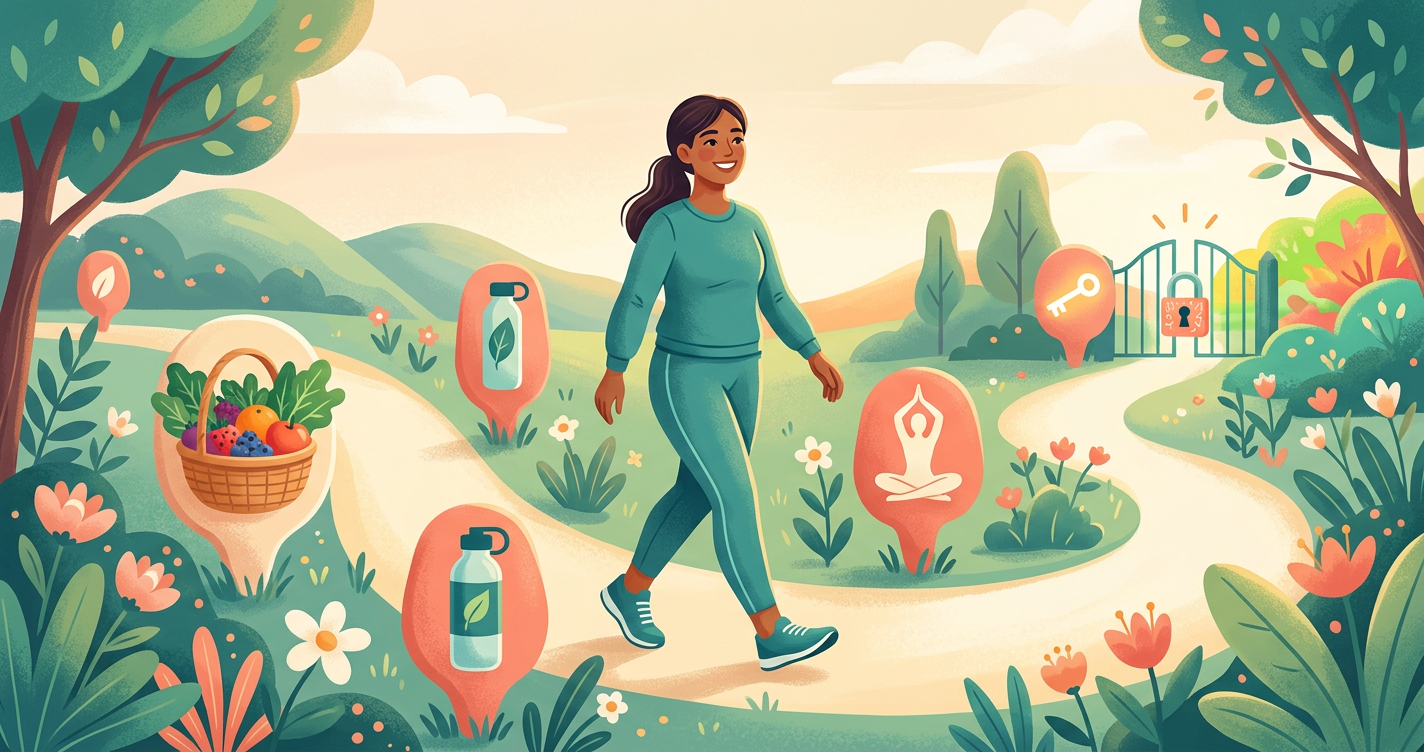
Are you tired of quick-fix diets that promise the world but deliver only frustration? Do you dream of a fat loss journey that feels manageable, healthy, and actually leads to lasting results? You’re in the right place! Today, we're diving deep into the most fundamental, evidence-based principle for shedding body fat: the calorie deficit. But not just any calorie deficit – we're talking about a sustainable one. Forget starvation and deprivation; we're here to build a foundation for long-term success, fueled by knowledge and a friendly, encouraging approach.
Many people find the idea of calorie counting daunting, or they associate 'deficit' with extreme hunger. But what if we told you it's simply about smart choices, understanding your body, and creating a lifestyle that supports your goals without feeling like a punishment? Let's demystify the calorie deficit and empower you to take control of your fat loss journey, one healthy, sustainable step at a time. this excellent wellness product
The Core Principle: What Exactly is a Calorie Deficit?
At its heart, fat loss boils down to a simple energy equation: you need to consume fewer calories than your body burns. This state is called a 'calorie deficit.' Think of your body like a car. To move, it needs fuel (calories). If you put in less fuel than it needs to travel a certain distance, it will eventually tap into its reserves. For your body, those reserves are stored fat.
Calories are simply units of energy found in the food and drinks we consume. Our bodies burn calories constantly, even at rest, for basic functions like breathing, circulation, and maintaining body temperature (this is your Basal Metabolic Rate or BMR). On top of that, we burn calories through physical activity, from walking to intense workouts, and even through digesting food (the Thermic Effect of Food or TEF).
When your total calorie intake is consistently lower than the total calories your body expends, your body is forced to use its stored energy (fat) to make up the difference. This, my friends, is how fat loss occurs. There's no magic pill or secret potion; it's a fundamental biological truth. Understanding this principle is the first, most crucial step towards effective and sustainable fat loss.
Beyond the Basics: Why "Sustainable" Matters Most
Anyone can create a calorie deficit by drastically cutting food. But how long can you really stick to a diet of 800 calories a day? Not long, and certainly not healthily! This is where the word 'sustainable' becomes incredibly important. A sustainable calorie deficit means creating a deficit that is:
- Manageable: You don't feel constantly deprived or ravenous.
- Nutritionally Adequate: You're still getting all the essential vitamins, minerals, and macronutrients your body needs.
- Enjoyable: You can still eat foods you like, participate in social events, and live your life.
- Long-Term Oriented: It's a strategy you can maintain for weeks, months, or even years, leading to lasting results rather than a rebound effect.
Crash diets often lead to rapid weight loss, but much of this is water weight and muscle mass, not just fat. When you severely restrict calories, your metabolism can slow down, and your body can interpret it as a famine, making it harder to lose fat and easier to regain weight once you stop the diet. A sustainable approach focuses on a moderate deficit, preserving muscle, and promoting healthy habits that stick.
How to Calculate Your Calorie Needs (And Create a Deficit)
Ready to get practical? The first step is to estimate how many calories your body burns in a day. This is often referred to as your Total Daily Energy Expenditure (TDEE). Your TDEE accounts for your BMR, your activity level, and the thermic effect of food.
Estimating Your TDEE:
While precise measurements require lab tests, several online calculators can give you a good estimate. These calculators typically ask for your age, sex, height, weight, and activity level. They use formulas like the Mifflin-St Jeor Equation or Harris-Benedict Equation to estimate your BMR and then factor in your activity.
Steps to Take:
- Find an online TDEE calculator: Search for "TDEE calculator" online.
- Input your data accurately: Be honest about your activity level.
- Get your estimated TDEE: This number represents the calories you need to maintain your current weight.
Creating Your Sustainable Deficit:
Once you have your TDEE, you can create your deficit. A common recommendation for sustainable fat loss is a deficit of 500 calories per day. This typically leads to a loss of about 1 pound of fat per week (since 1 pound of fat is roughly 3,500 calories).
- Your Target Calorie Intake = TDEE - 500 calories.
For some, a 300-calorie deficit might be more comfortable and equally effective over time, especially if you're already very active or have less weight to lose. The key is to find a deficit that you can comfortably maintain without feeling overly hungry or deprived. Listen to your body!
Fueling Your Body Smartly: Nutrition Strategies for Fat Loss
Simply eating fewer calories isn't enough; the quality of those calories matters immensely for your health, satiety, and energy levels. This is where smart nutrition comes into play.
Prioritize Protein:
Protein is your best friend for fat loss. It's highly satiating, meaning it keeps you feeling full longer, which helps reduce overall calorie intake. It also helps preserve muscle mass during a deficit, which is crucial for maintaining a healthy metabolism. Aim for a good source of protein at every meal: lean meats, poultry, fish, eggs, dairy, legumes, tofu, tempeh.
Embrace Fiber-Rich Foods:
Foods high in fiber – fruits, vegetables, whole grains, and legumes – add bulk to your meals, promoting fullness without adding many calories. They also support gut health and provide essential nutrients.
Don't Fear Healthy Fats:
While fats are calorie-dense, healthy fats (avocado, nuts, seeds, olive oil) are vital for hormone production, nutrient absorption, and satiety. Include them in moderation to keep you satisfied and your body functioning optimally.
Choose Whole, Unprocessed Foods:
Minimize ultra-processed foods, sugary drinks, and excessive amounts of refined carbohydrates. These tend to be calorie-dense, nutrient-poor, and less satiating, making it harder to stick to your deficit.
Hydration is Key:
Often overlooked, drinking plenty of water can help with satiety and overall bodily functions. Sometimes, what feels like hunger is actually thirst.
The Role of Movement: Exercise as Your Ally
While you can create a calorie deficit through diet alone, incorporating exercise makes the process more efficient, healthier, and helps sculpt your physique. Exercise contributes to your TDEE, allowing for a slightly higher calorie intake while still being in a deficit, or helping to deepen your deficit if your food intake is consistent.
Strength Training: Your Muscle-Building Powerhouse
Resistance training (lifting weights, bodyweight exercises) is paramount for fat loss. It helps preserve and build muscle mass. More muscle means a higher resting metabolism, as muscle tissue burns more calories at rest than fat tissue. Aim for 2-4 sessions per week.
Cardio: The Calorie Burner
Cardiovascular exercise (walking, running, cycling, swimming) directly burns calories and improves heart health. Incorporate a mix of steady-state cardio and high-intensity interval training (HIIT) for optimal results and variety. Even consistent daily walks can make a significant difference!
Beyond Food and Exercise: Lifestyle Factors for Success
Fat loss isn't just about what you eat and how you move; it's a holistic endeavor. Several lifestyle factors play a huge role in your ability to consistently stick to a deficit and achieve your goals.
- Quality Sleep: Lack of sleep can disrupt hormones that regulate hunger (ghrelin) and satiety (leptin), making you hungrier and more prone to cravings. Aim for 7-9 hours of quality sleep per night.
- Stress Management: Chronic stress can elevate cortisol levels, which can promote fat storage, particularly around the belly. Find healthy ways to manage stress, such as meditation, yoga, spending time in nature, or hobbies.
- Consistency: This is perhaps the most underrated factor. It's not about being perfect every day, but about being consistent most days. Small, consistent efforts compound over time into significant results.
- Mindful Eating: Pay attention to your hunger and fullness cues. Eat slowly, savor your food, and avoid distractions like screens. This can help you recognize when you're truly satisfied.
Navigating Plateaus and Staying Motivated
Your fat loss journey won't always be a straight line. You'll encounter plateaus, weeks where the scale doesn't budge, or even slight increases. Don't despair; this is normal!
Why Plateaus Happen:
- Metabolic Adaptation: As you lose weight, your body requires fewer calories to maintain itself, so your TDEE naturally decreases.
- Water Fluctuations: Hormones, salt intake, and even exercise can cause temporary water retention.
- Muscle Gain: If you're strength training, you might be gaining muscle while losing fat, leading to no change or even an increase on the scale.
Breaking Through a Plateau:
- Re-evaluate your TDEE: As you lose weight, your calorie needs change. Recalculate your TDEE and adjust your deficit accordingly.
- Increase Activity: Add more steps, an extra workout, or increase the intensity of your current routine.
- Be More Diligent: Track your food and exercise even more meticulously for a week or two to catch any "hidden" calories or missed workouts.
- Consider a Diet Break: Sometimes, taking a 1-2 week break from your deficit, eating at maintenance, can help reset your metabolism and mental state before resuming.
Stay motivated by focusing on non-scale victories: improved energy, better sleep, clothes fitting differently, increased strength, and overall well-being. Celebrate these successes!
Your Sustainable Path Forward
Embracing a sustainable calorie deficit is the most powerful tool you have for achieving lasting fat loss. It's not about starvation; it's about education, mindful choices, and understanding your body's energy needs. By prioritizing whole foods, incorporating regular movement, getting enough sleep, and managing stress, you're not just losing fat – you're building a healthier, stronger, and more vibrant you.
Remember, this is your journey. Be patient with yourself, celebrate every small victory, and focus on consistency over perfection. You have the power to transform your health and achieve your fat loss goals in a way that feels good and lasts a lifetime. Start today, one smart, sustainable choice at a time!