Have you ever felt caught in the frustrating cycle of losing weight only to regain it, often with a little extra? You're not alone. In a world obsessed with quick fixes and dramatic transformations, it's easy to fall prey to crash diets that promise the moon but deliver only temporary results and a whole lot of frustration. But what if there was a better way? A sustainable path to fat loss that doesn't involve deprivation, endless cardio, or feeling guilty about every bite?
Get ready to ditch the diet mentality and embrace a powerful, evidence-based approach to sustainable fat loss. This isn't about restriction; it's about understanding your body, nourishing it wisely, moving it joyfully, and cultivating habits that support a healthier, happier you for the long haul. Let's unlock the secrets to lasting change together! this excellent wellness product
Why Crash Diets Fail (And Why That's Okay!)
Before we dive into what does work, let's briefly understand why those tempting crash diets often set us up for failure. When you drastically cut calories, your body, designed for survival, perceives this as a famine. It responds by slowing down your metabolism to conserve energy, breaking down muscle for fuel (which further hurts your metabolism), and increasing hunger hormones. Emotionally, extreme restriction often leads to intense cravings, binge eating, and a feeling of deprivation that's simply unsustainable. It's not a lack of willpower; it's your body's natural response to an unnatural situation.
The Metabolic Rebound
After a period of extreme dieting, your metabolism is often slower, and your body is primed to store fat more efficiently once you return to a normal eating pattern. This 'metabolic rebound' is a major reason for weight regain, often leaving individuals heavier than when they started.
The Foundation: Calorie Awareness, Not Obsession
At its core, fat loss comes down to a simple principle: consuming fewer calories than your body expends. This is known as a 'calorie deficit.' However, 'fewer calories' doesn't mean 'starvation.' It means making smart choices that allow you to feel full and satisfied while still being in a gentle deficit.
Understanding Your Energy Needs
Your body burns calories just to exist (your Basal Metabolic Rate or BMR) and more for daily activities and exercise (Total Daily Energy Expenditure or TDEE). There are online calculators that can give you an estimate of your TDEE. Aim for a modest deficit of 300-500 calories below your TDEE for sustainable fat loss – this allows for consistent progress without triggering extreme hunger or metabolic slowdown.
Prioritizing Nutrient-Dense Foods
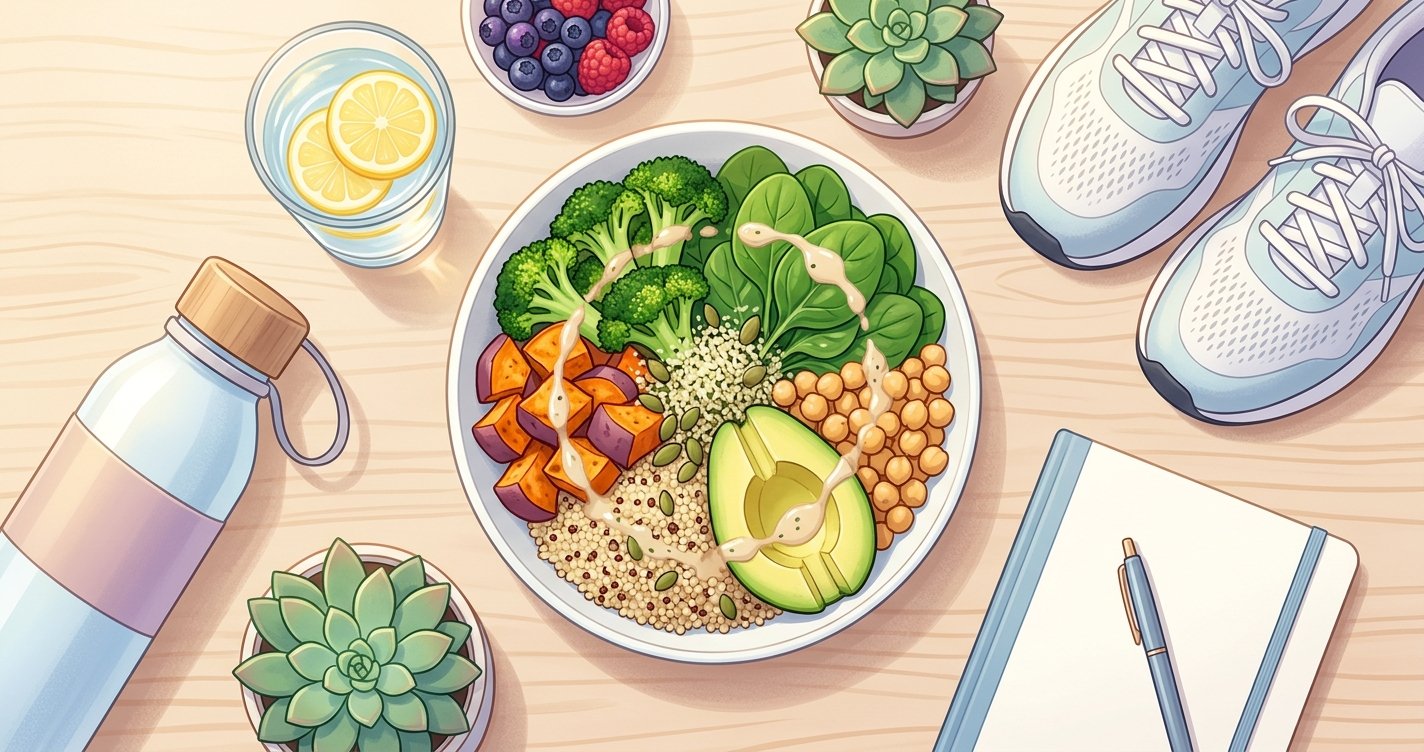
While calories matter, the source of those calories matters even more. Focus on whole, unprocessed foods that provide essential nutrients, fiber, and protein. These foods keep you fuller for longer, provide sustained energy, and support overall health:
- Lean Proteins: Chicken breast, turkey, fish, eggs, Greek yogurt, tofu, legumes. Protein is incredibly satiating and helps preserve muscle mass during fat loss.
- Fiber-Rich Carbohydrates: Whole grains (oats, quinoa, brown rice), fruits, and vegetables. Fiber aids digestion, stabilizes blood sugar, and promotes fullness.
- Healthy Fats: Avocados, nuts, seeds, olive oil. Fats are crucial for hormone production and nutrient absorption, and they add satiety to meals.
The Power of Movement: More Than Just Burning Calories
Exercise isn't just about 'burning off' calories; it's a powerful tool for building a stronger, healthier body, boosting your metabolism, and improving your mood. A balanced approach combines different types of movement.
Strength Training: Your Muscle-Building Ally
Lifting weights (or using your body weight) is arguably the most impactful exercise for sustainable fat loss. Muscle tissue is metabolically active, meaning it burns more calories at rest than fat tissue. Building muscle not only helps you look more toned but also increases your resting metabolism, making it easier to maintain a calorie deficit.
Cardio for Heart Health and Energy
Cardiovascular exercise, like brisk walking, jogging, cycling, or swimming, is excellent for heart health, endurance, and burning calories during the activity. Aim for a mix of moderate-intensity steady-state cardio and perhaps some high-intensity interval training (HIIT) if you enjoy it and your fitness level allows.
NEAT: The Unsung Hero of Daily Activity
NEAT stands for Non-Exercise Activity Thermogenesis – essentially, all the movement you do that isn't structured exercise. This includes walking to the store, taking the stairs, fidgeting, gardening, or cleaning. NEAT can significantly contribute to your daily calorie expenditure and is a fantastic way to increase overall activity without feeling like you're 'working out.' Look for opportunities to move more throughout your day!
Beyond Diet and Exercise: Holistic Pillars of Fat Loss
Sustainable fat loss isn't just about what you eat and how you move; it's about nurturing your entire well-being. These often-overlooked factors play a crucial role.
Sleep: The Overlooked Fat Loss Lever
In our busy lives, sleep is often the first thing to be sacrificed. However, insufficient sleep wreaks havoc on your hormones, particularly ghrelin (the hunger hormone) and leptin (the satiety hormone). When you're sleep-deprived, ghrelin increases, making you hungrier, while leptin decreases, meaning you don't feel as full. Cortisol, the stress hormone, also rises, which can promote fat storage around the midsection. Aim for 7-9 hours of quality sleep per night.
Stress Management: Taming Cortisol's Grip
Chronic stress triggers the release of cortisol, which can lead to increased appetite, cravings for sugary and fatty foods, and a tendency to store fat, particularly in the abdominal area. Finding healthy ways to manage stress – whether through meditation, yoga, spending time in nature, or hobbies – is vital for both your mental health and your waistline.
Hydration: Simple Yet Profound
Water is essential for countless bodily functions, including metabolism. Drinking enough water can help you feel fuller, boost metabolism slightly, and ensure your body is functioning optimally. Sometimes, thirst is mistaken for hunger, so staying well-hydrated can help prevent unnecessary snacking. Aim for at least 8 glasses (around 2 liters) of water daily, more if you're active.
Cultivating a Positive Mindset & Patience
The journey to sustainable fat loss is as much mental as it is physical. A positive, patient, and compassionate mindset is your most powerful ally.
Mindful Eating: Connecting with Your Body's Signals
Slow down and pay attention to your food. Savor each bite, notice the textures and flavors, and listen to your body's hunger and fullness cues. Eating mindfully can help you enjoy your food more, eat less, and develop a healthier relationship with food, moving away from restrictive thinking.
Embracing the Journey: It's a Marathon, Not a Sprint
Sustainable fat loss takes time. There will be good days and challenging days. Don't seek perfection; seek consistency. Celebrate small victories, learn from setbacks without self-blame, and remember that progress is rarely linear. Focus on building habits that you can maintain for life, not just for a few weeks.
Your Path to Lasting Health Begins Now!
You have the power to transform your relationship with food and your body. By moving away from the restrictive cycle of crash diets and embracing a holistic approach focusing on nutrient-dense foods, consistent movement, quality sleep, stress management, and a positive mindset, you can achieve sustainable fat loss and build a foundation for lifelong health and vitality.
Remember, this isn't about deprivation; it's about empowerment. Start small, be consistent, and be kind to yourself. Your body is capable of amazing things, and you've got this!