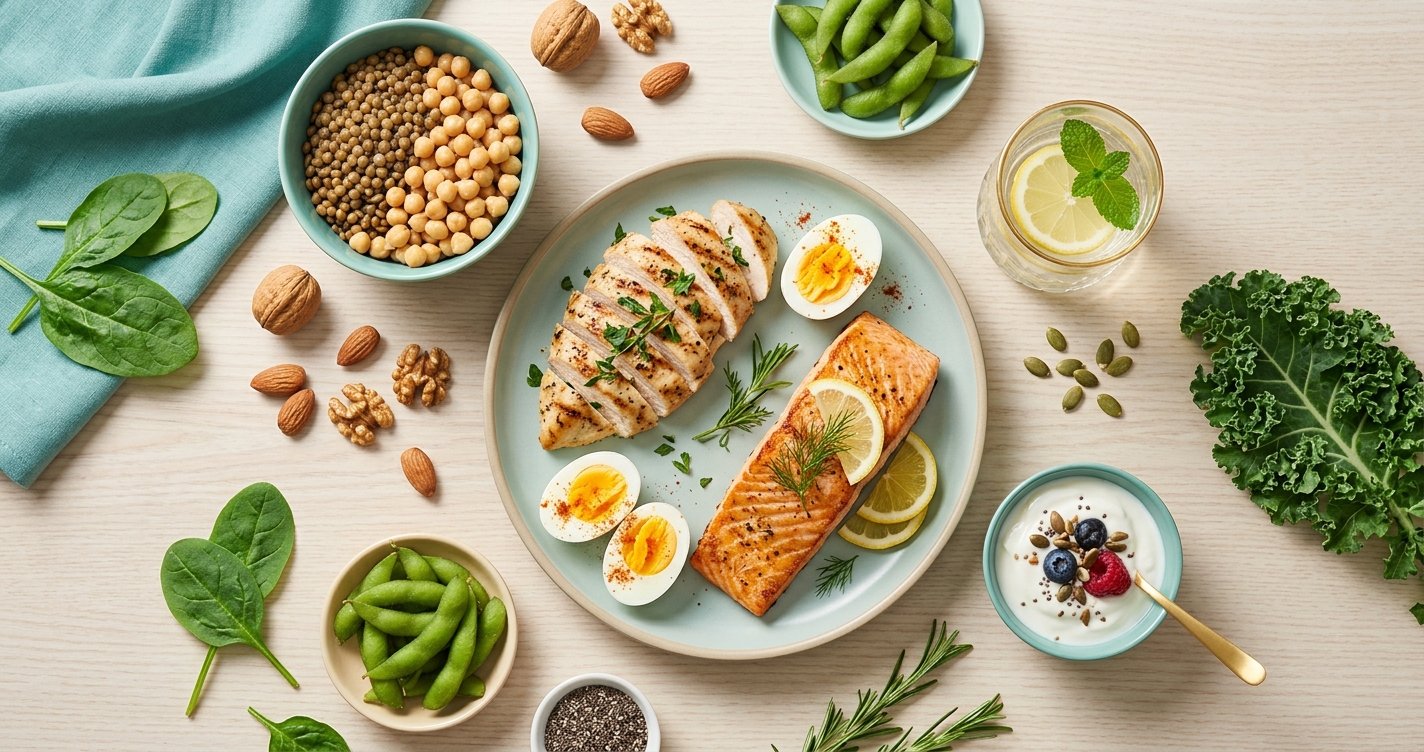
Embarking on a fat loss journey can feel like navigating a complex maze. You’re bombarded with countless diets, workout routines, and often contradictory advice. But what if there was one nutritional powerhouse that could significantly simplify your path, boost your results, and make the entire process more sustainable? Enter protein – your often-underestimated, yet incredibly potent ally in the quest for a leaner, stronger you.
Forget the fads and quick fixes. This isn't about deprivation; it's about smart, evidence-based nutrition that empowers your body to burn fat more efficiently, preserve precious muscle, and keep hunger at bay. In this comprehensive guide, we'll dive deep into why protein is an absolute MVP for fat loss, how much you truly need, the best sources, and practical strategies to integrate it seamlessly into your daily life. Get ready to unlock the full potential of protein and transform your body from the inside out! this excellent wellness product
Why Protein is Your Fat Loss MVP (Most Valuable Player)
Protein isn't just for bodybuilders; it's a fundamental macronutrient vital for everyone, especially those looking to shed fat. Its unique properties offer several distinct advantages that make it indispensable for effective and sustainable weight management.
Satiety and Hunger Control: Taming the Cravings Beast
One of the biggest hurdles in fat loss is managing hunger and cravings. Protein is a champion in this department. Compared to carbohydrates and fats, protein has the highest satiety factor, meaning it keeps you feeling fuller for longer. When you consume adequate protein, your body releases hormones like peptide YY and cholecystokinin (CCK) that signal fullness to your brain, reducing the urge to snack unnecessarily and helping you adhere to a calorie deficit more easily.
The Thermic Effect of Food (TEF): Your Metabolic Boost
Did you know that your body expends energy just to digest, absorb, and metabolize the food you eat? This is known as the Thermic Effect of Food (TEF), and protein has the highest TEF of all macronutrients. Approximately 20-30% of the calories from protein are burned off during digestion, compared to 5-10% for carbs and 0-3% for fats. This means that a high-protein diet naturally increases your daily calorie expenditure, giving you a slight metabolic advantage in your fat loss efforts.
Muscle Preservation: Protecting Your Metabolism
When you're in a calorie deficit to lose fat, there's always a risk of losing muscle mass along with fat. Losing muscle is detrimental because muscle tissue is more metabolically active than fat tissue, meaning it burns more calories at rest. A higher protein intake, especially when combined with strength training, helps signal your body to preserve muscle tissue while primarily targeting fat stores. This not only maintains your metabolic rate but also contributes to a more toned and defined physique.
How Much Protein Do You Really Need for Fat Loss? (The Numbers Game)
This is where many people get confused. The Recommended Dietary Allowance (RDA) for protein is 0.8 grams per kilogram of body weight (0.36 grams per pound), but this is simply the minimum to prevent deficiency, not necessarily the optimal amount for active individuals or those aiming for fat loss.
- For Fat Loss: Research suggests that a higher protein intake, typically in the range of 1.6 to 2.2 grams of protein per kilogram of body weight (approximately 0.7 to 1.0 gram per pound of body weight), is ideal.
- Consider Lean Body Mass: If you carry a significant amount of excess weight, using your lean body mass (total body weight minus fat mass) as a basis might be more accurate to avoid excessively high protein targets. However, for most, using total body weight within this range is a practical and effective approach.
- Don't Fear Going Higher: Some studies show benefits even at 2.5-3.0 g/kg for very active individuals or during aggressive calorie deficits, demonstrating protein's safety and efficacy for satiety and muscle preservation.
For example, if you weigh 150 pounds, aiming for 105-150 grams of protein per day would be a great starting point.
Protein Sources: Fueling Your Body Smartly
Variety is the spice of life, and it's also key to hitting your protein targets and ensuring you get a full spectrum of amino acids and other vital nutrients.
Animal-Based Proteins: Complete and Convenient
These are often considered 'complete' proteins, meaning they contain all nine essential amino acids your body can't produce on its own. They are typically very bioavailable.
- Lean Meats: Chicken breast, turkey, lean beef (sirloin, round), pork loin.
- Fish & Seafood: Salmon, tuna, cod, shrimp, sardines (rich in omega-3s too!).
- Eggs: A versatile and affordable protein powerhouse.
- Dairy: Greek yogurt, cottage cheese, skim milk, whey protein powder.
Plant-Based Proteins: Diverse and Nutrient-Dense
While many plant proteins are 'incomplete' on their own, combining various sources throughout the day easily provides all essential amino acids. They also come with the added benefit of fiber and various micronutrients.
- Legumes: Lentils, chickpeas, black beans, kidney beans.
- Soy Products: Tofu, tempeh, edamame (excellent complete plant proteins).
- Grains: Quinoa, buckwheat, oats (especially steel-cut).
- Nuts & Seeds: Almonds, peanuts, chia seeds, flax seeds, pumpkin seeds.
- Vegetables: Broccoli, spinach, asparagus (contain smaller amounts, but every bit counts!).
- Plant-Based Protein Powders: Pea, rice, hemp protein can be great supplements.
Timing and Distribution: Maximizing Protein's Benefits
It's not just about how much protein you eat, but also when and how you spread it out. Optimizing your protein timing can further enhance satiety, muscle preservation, and recovery.
- Spread It Out: Aim to consume protein across 3-5 meals or snacks throughout the day. This provides a steady supply of amino acids, optimizing muscle protein synthesis and keeping hunger at bay. Try to get 20-40 grams of protein per main meal.
- Protein at Breakfast: Starting your day with a high-protein breakfast (e.g., eggs, Greek yogurt, protein smoothie) can significantly reduce hunger and calorie intake later in the day.
- Post-Workout: While the 'anabolic window' isn't as narrow as once thought, consuming protein after your workout still aids in muscle repair and recovery, especially if your previous meal was several hours prior.
- Before Bed: A slow-digesting protein like casein (found in cottage cheese or casein protein powder) before bed can provide a steady release of amino acids overnight, supporting muscle recovery and reducing muscle breakdown.
Practical Strategies to Boost Your Protein Intake
Incorporating more protein into your diet doesn't have to be complicated. Here are some simple, actionable tips:
- Plan Ahead: Dedicate time to meal prep. Cook a batch of chicken breast, hard-boil eggs, or prepare lentil soup for quick protein additions throughout the week.
- Protein-Packed Breakfasts: Swap sugary cereals for Greek yogurt with berries, scrambled eggs with veggies, or a protein smoothie.
- Smart Snacking: Instead of chips or cookies, opt for cottage cheese, a handful of almonds, beef jerky, a small can of tuna, or a protein bar.
- Add Protein to Every Meal: Ensure each meal contains a significant protein source. Add chicken to your salad, beans to your rice, or extra lean ground beef to your pasta sauce.
- Utilize Protein Powders: While whole foods should be your primary source, protein powders (whey, casein, pea, rice, etc.) are convenient for boosting intake, especially post-workout or when you're short on time. Add them to smoothies, oats, or even bake with them.
- Be Mindful of Portions: Visually estimate protein portions – a palm-sized portion of meat is roughly 3-4 ounces, providing 20-30 grams of protein.
Common Protein Myths Debunked
Let's clear up some common misconceptions that might be holding you back:
Myth 1: Too Much Protein is Bad for Your Kidneys
Reality: For healthy individuals with normal kidney function, there is no strong evidence that a high-protein diet causes kidney damage. Studies show that even very high protein intakes (up to 2.8 g/kg) are safe. However, if you have pre-existing kidney disease, you should consult your doctor before significantly increasing protein intake.
Myth 2: Protein Will Make You Bulky (Especially for Women)
Reality: Protein is essential for building and repairing muscle, but it won't automatically make you 'bulky.' Building significant muscle mass requires intense training, a calorie surplus, and specific hormonal profiles often different from those of most women. Adequate protein helps create a lean, toned physique, not an overly muscular one, unless that is your specific goal.
Myth 3: All Protein is Created Equal
Reality: While all protein contains amino acids, the quality and completeness vary. Animal proteins are generally considered 'complete,' while many plant proteins are 'incomplete.' However, by consuming a variety of plant-based protein sources throughout the day, you can easily obtain all essential amino acids. Also, consider the overall nutritional profile – a lean chicken breast offers different benefits than a highly processed protein bar loaded with sugar.
Embrace the Protein Advantage for Lasting Results
Optimizing your protein intake is one of the most powerful, yet often underutilized, strategies for sustainable fat loss. It's not about magic pills or extreme diets; it's about giving your body the fundamental building blocks it needs to thrive, feel full, burn calories more efficiently, and protect your precious muscle mass.
By prioritizing protein, you're not just losing weight; you're building a stronger, healthier, and more resilient body. Remember, consistency is key. Start by making small, manageable changes – add an extra serving of protein to one meal, swap a sugary snack for a protein-rich option, or track your intake for a few days to get a baseline. Be patient with yourself, listen to your body, and celebrate every step of your journey. Your body will thank you for it, and you’ll be well on your way to achieving your fat loss goals and maintaining them for life!