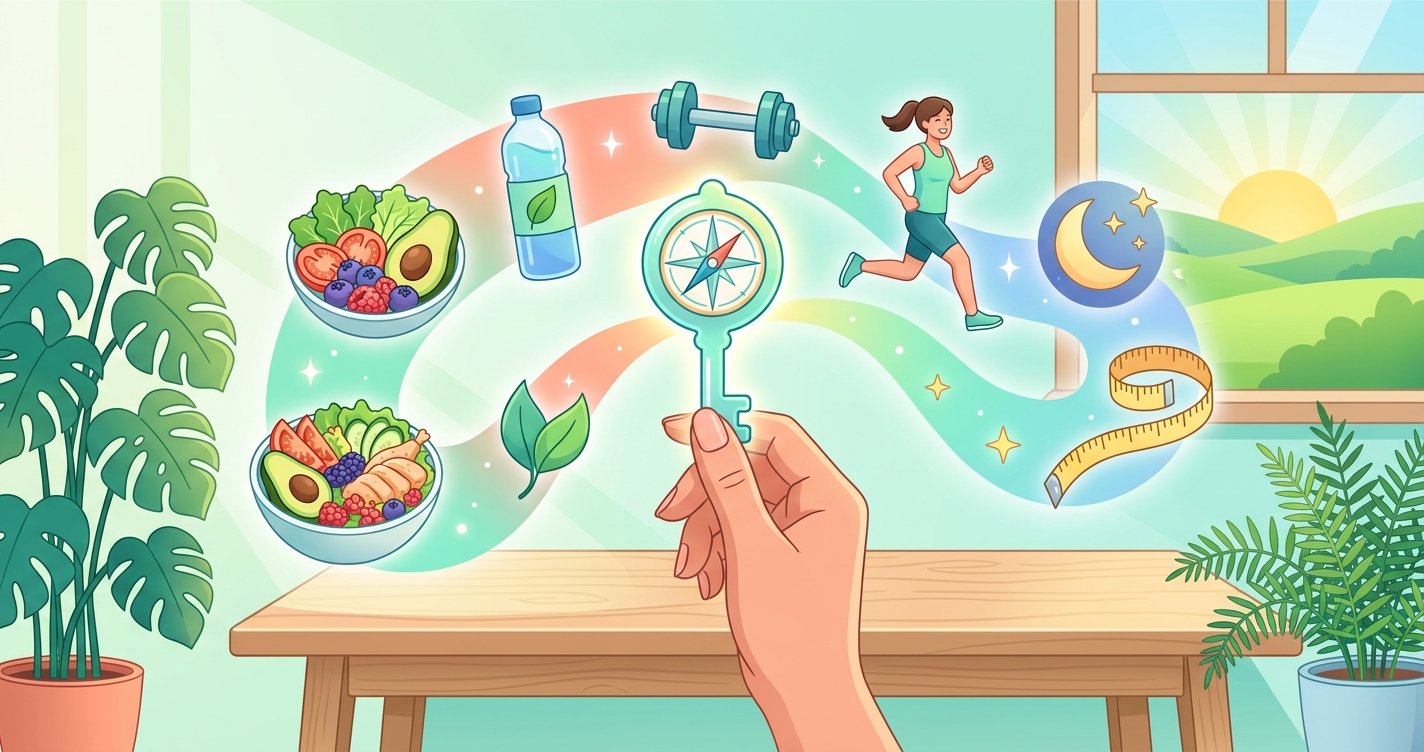
Are you tired of the endless cycle of crash diets and rebound weight gain? You're not alone. Many people approach fat loss with an all-or-nothing mindset, leading to frustration and burnout. But what if there was a smarter, kinder, and more effective way to shed those extra pounds for good? There is, and it all boils down to understanding and implementing a sustainable calorie deficit.
Forget deprivation and extreme measures. This guide will walk you through the evidence-based principles of creating a calorie deficit that works with your body, not against it, helping you achieve lasting fat loss without sacrificing your sanity or your favorite foods. Let's dive in! this excellent wellness product
What Exactly IS a Calorie Deficit? (And Why It Matters)
At its core, fat loss is a simple equation: you need to burn more calories than you consume. This difference is called a calorie deficit. Think of calories as units of energy. Your body needs energy for everything it does – from breathing and thinking to exercising and digesting food.
The Energy Balance Equation Simplified
When you eat food, your body converts it into energy (calories). Your body then expends energy through various processes:
- Basal Metabolic Rate (BMR): The calories your body burns at rest to maintain basic life functions (breathing, circulation, organ function).
- Thermic Effect of Food (TEF): The calories your body uses to digest, absorb, and metabolize the food you eat.
- Activity Energy Expenditure (AEE): The calories burned through physical activity, both planned exercise and non-exercise activity thermogenesis (NEAT, like fidgeting, walking around).
Your Total Daily Energy Expenditure (TDEE) is the sum of these. If your calorie intake is consistently lower than your TDEE, your body will tap into its stored energy (primarily fat) to make up the difference, leading to fat loss.
Why "Sustainable" is Your Secret Weapon
Anyone can create a calorie deficit by drastically cutting food intake. The challenge lies in doing so in a way that's manageable, enjoyable, and doesn't lead to negative health consequences or rebound weight gain. This is where sustainability comes in.
The Downfalls of Extreme Deficits
While a large calorie deficit might seem like a fast track to results, it often backfires. Extreme deficits can lead to:
- Muscle Loss: Your body might break down muscle tissue for energy, which is counterproductive for fat loss and metabolism.
- Nutrient Deficiencies: Restrictive diets often lack essential vitamins and minerals.
- Low Energy & Mood Swings: Constant hunger and low energy can make you irritable and less productive.
- Metabolic Adaptation: Your metabolism can slow down as your body tries to conserve energy, making further fat loss harder.
- Unsustainability: These diets are incredibly difficult to maintain long-term, often leading to binge eating and regaining all the lost weight (and sometimes more!).
Building Habits, Not Just Losing Weight
A sustainable approach focuses on gradual, consistent progress. It's about making small, manageable changes to your eating and activity habits that you can stick with for life. This builds a foundation for lasting health, not just a temporary drop on the scale.
How to Calculate YOUR Sustainable Calorie Deficit
Let's get practical! While precise calculations can be complex, you can get a very good estimate to start with. Remember, these are starting points; your body is unique, and you'll need to adjust based on your progress.
Step 1: Estimate Your Basal Metabolic Rate (BMR)
Your BMR is the number of calories your body needs to perform basic functions at rest. You can use online calculators (like those based on the Mifflin-St Jeor equation) which require your age, gender, height, and weight. For example, a 35-year-old female, 5'5" (165cm), 160 lbs (72.5kg) might have a BMR around 1450 calories.
Step 2: Factor In Your Activity Level (TDEE)
Now, multiply your BMR by an activity factor to estimate your TDEE. This accounts for all the energy you expend throughout the day:
- Sedentary (little to no exercise): BMR x 1.2
- Lightly Active (light exercise/sports 1-3 days/week): BMR x 1.375
- Moderately Active (moderate exercise/sports 3-5 days/week): BMR x 1.55
- Very Active (hard exercise/sports 6-7 days/week): BMR x 1.725
- Extremely Active (hard daily exercise/physical job): BMR x 1.9
Using our example above, if our individual is moderately active (1450 BMR x 1.55), her TDEE would be approximately 2247 calories.
Step 3: Create a Modest Deficit
For sustainable fat loss, a deficit of 300-500 calories below your TDEE is generally recommended. This typically leads to a healthy and sustainable fat loss of 0.5 to 1 pound per week. A pound of fat is roughly 3500 calories, so a 500-calorie daily deficit results in about one pound of fat loss per week (500 calories/day x 7 days/week = 3500 calories/week).
So, for our example individual with a TDEE of 2247 calories, a sustainable target intake would be between 1747 (2247 - 500) and 1947 (2247 - 300) calories per day.
Important Note: Never go below 1200 calories for women or 1500 calories for men without medical supervision, as this can be detrimental to your health.
Practical Strategies for Achieving Your Deficit (Without Feeling Deprived)
Knowing your target is one thing, hitting it consistently is another. Here's how to make it feel easy:
Prioritize Protein and Fiber
These two nutrients are your best friends for fat loss. Protein is highly satiating, meaning it keeps you feeling full for longer, and it helps preserve muscle mass during a deficit. Fiber, found in fruits, vegetables, and whole grains, also contributes to fullness and supports digestive health.
- Aim for: 0.7-1 gram of protein per pound of your target body weight.
- Include: Lean meats, poultry, fish, eggs, dairy, legumes, and plant-based protein sources.
Embrace Volume Eating
Volume eating means choosing foods that are low in calories but high in volume, helping you feel satisfied without consuming too many calories. Think big salads, non-starchy vegetables, broth-based soups, and fruits.
Smart Snacking and Hydration
Choose nutrient-dense snacks like Greek yogurt, a piece of fruit with a handful of nuts, or vegetable sticks with hummus. And don't forget water! Often, thirst is mistaken for hunger. Staying well-hydrated can curb unnecessary snacking.
Mindful Eating Practices
Slow down, savor your food, and pay attention to your body's hunger and fullness cues. Eating mindfully can help you recognize when you're truly satisfied and prevent overeating.
The Role of Exercise: Move More, Burn More
While nutrition is paramount, exercise plays a crucial supporting role in a sustainable calorie deficit.
Strength Training: Your Metabolism's Best Friend
Building and maintaining muscle mass is vital for fat loss. Muscle tissue is more metabolically active than fat tissue, meaning it burns more calories at rest. Strength training helps preserve muscle during a deficit and can even build new muscle, boosting your BMR over time.
Cardio: The Calorie Burn Booster
Cardiovascular exercise (like walking, jogging, cycling, or swimming) directly burns calories, helping you widen your deficit or even allow for a slightly higher food intake. Aim for a mix of steady-state cardio and perhaps some high-intensity interval training (HIIT) if appropriate for your fitness level.
Listening to Your Body & Adjusting Along the Way
Your body isn't a static machine. As you lose weight, your TDEE will naturally decrease because there's less of you to move around. This means you'll need to adjust your calorie intake periodically to maintain your deficit.
The Plateau Problem and How to Break Through
It's common to hit plateaus where fat loss stalls. Don't panic! This is a normal part of the process. When a plateau occurs, consider:
- Revisiting your calorie target: Recalculate your TDEE based on your new weight.
- Increasing NEAT: Move more throughout your day outside of structured workouts.
- Adjusting macros: Ensure you're getting enough protein.
- Taking a diet break: A week at maintenance calories can sometimes help reset hormones and metabolism.
The Importance of Patience and Consistency
Sustainable fat loss is a marathon, not a sprint. There will be good days and challenging days. The key is consistency over perfection. Don't let one slip-up derail your entire journey. Get back on track with your next meal or workout.
Beyond the Numbers: The Bigger Picture
While calories are a crucial part of the equation, remember that overall health and well-being are just as important. Focus on eating nutrient-dense foods, getting adequate sleep, managing stress, and enjoying the process. Fat loss should enhance your life, not consume it.
Embracing a sustainable calorie deficit is about building a healthier relationship with food and your body. It's about empowering yourself with knowledge and making choices that support your long-term goals. By taking a friendly, evidence-based approach, you're not just losing weight; you're gaining sustainable habits and a healthier, happier you. You've got this!