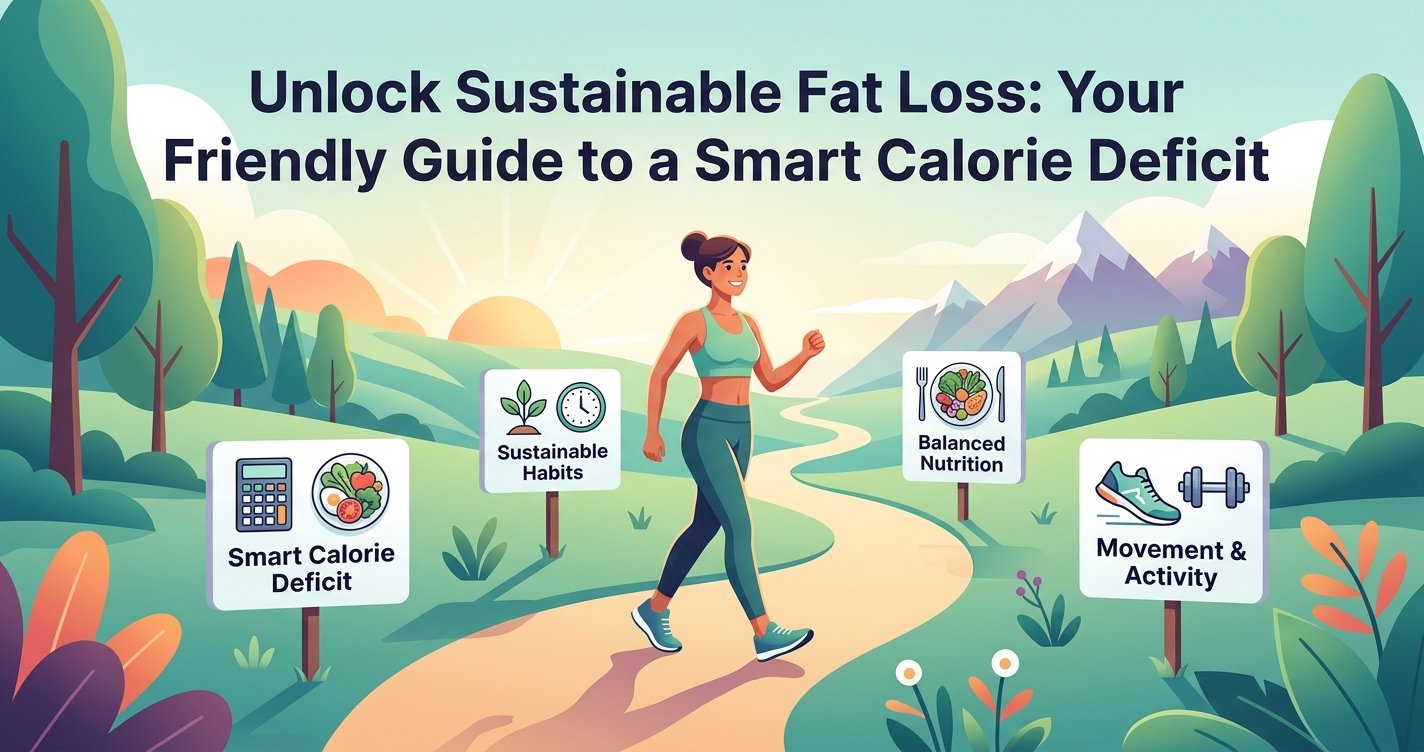
Unlock Sustainable Fat Loss: Your Friendly Guide to a Smart Calorie Deficit
Are you tired of the diet roller coaster? The promise of quick fixes that leave you feeling deprived, frustrated, and often heavier than when you started? You're not alone. Many people embark on fat loss journeys with enthusiasm, only to hit a wall when extreme restrictions become unsustainable. But what if there was a smarter, kinder, and more effective way to achieve lasting fat loss? There is, and it all revolves around mastering the art of a sustainable calorie deficit.
This isn't about starvation or cutting out your favorite foods forever. It's about understanding your body's energy needs and making informed choices that lead to gradual, consistent fat loss you can actually maintain. In this guide, we'll dive deep into what a calorie deficit truly means, how to create one that works for you, and practical strategies to make it a sustainable part of your lifestyle. Get ready to ditch the deprivation and embrace a path to a healthier, happier you! this excellent wellness product
What Exactly IS a Calorie Deficit, Anyway? (And Why It Matters)
At its core, fat loss boils down to a fundamental principle of energy balance. Think of your body like a car and calories as its fuel.
The Simple Math of Energy Balance
Every day, your body burns a certain amount of energy (calories) just to keep you alive and functioning – breathing, thinking, circulating blood, and digesting food. This is your Basal Metabolic Rate (BMR). On top of that, you burn calories through physical activity, from walking to the kitchen to an intense gym session. When you add your BMR and activity levels together, you get your Total Daily Energy Expenditure (TDEE) – the total number of calories your body burns in a day.
A calorie deficit simply means consistently consuming fewer calories than your TDEE. When this happens, your body has to tap into its stored energy reserves, primarily body fat, to make up the difference. This is the only way genuine fat loss occurs.
Why "Sustainable" is the Magic Word
Anyone can create a drastic calorie deficit for a short period. That's what crash diets do. But extreme deficits often lead to:
- Severe hunger and cravings: Making it incredibly difficult to stick to.
- Nutrient deficiencies: Impacting your health and energy levels.
- Muscle loss: Which slows down your metabolism.
- Metabolic adaptation: Your body adapts to the low intake, making further fat loss harder.
- Burnout and rebound weight gain: The infamous "yo-yo" effect.
A sustainable calorie deficit, on the other hand, is one that allows you to lose fat gradually while preserving muscle, feeling good, and maintaining your health and sanity. It's about finding that sweet spot where you're consistently losing fat without feeling deprived.
Step-by-Step: How to Calculate Your Starting Calorie Target
While online calculators are a good starting point, remember they are estimates. Your body is unique, and some trial and error will be involved.
Finding Your Basal Metabolic Rate (BMR) and Total Daily Energy Expenditure (TDEE)
You can use an online TDEE calculator (just search "TDEE calculator") to get an initial estimate. You'll input details like your age, gender, height, weight, and activity level. This will give you a ballpark figure of how many calories you burn daily.
Creating Your Deficit: The Sweet Spot
Once you have your estimated TDEE, the next step is to subtract a moderate number of calories to create your deficit. For sustainable fat loss, a deficit of 300-500 calories below your TDEE is generally recommended. This typically results in a healthy fat loss rate of 0.5 to 1 pound per week.
- Example: If your TDEE is 2200 calories, aim for an intake of 1700-1900 calories per day.
Going much lower than this can be counterproductive for the reasons mentioned above. Your goal is consistency, not perfection!
Mastering Your Macros: Fueling Your Body for Fat Loss
While total calories are king for fat loss, the composition of those calories – your macronutrients (protein, carbs, fats) – plays a crucial role in how you feel, how much muscle you retain, and how satisfied you are.
The Power of Protein
If there's one macronutrient to prioritize during a fat loss phase, it's protein. Here's why:
- Satiety: Protein is incredibly filling, helping you feel fuller for longer and reducing cravings.
- Muscle Preservation: Adequate protein intake is vital for preserving lean muscle mass, which is crucial for maintaining a healthy metabolism.
- Thermic Effect: Protein has a higher thermic effect of food (TEF), meaning your body burns more calories digesting it compared to carbs or fats.
Aim for around 0.7-1 gram of protein per pound of your target body weight. Excellent sources include lean meats, poultry, fish, eggs, dairy, legumes, and protein supplements.
Don't Fear the Carbs (or Healthy Fats!)
Carbohydrates and fats have gotten a bad rap in some diet trends, but they are essential for your health and energy.
- Carbohydrates: Provide your body with its primary source of energy, fueling your workouts and daily activities. Focus on complex carbohydrates like whole grains, fruits, and vegetables for sustained energy and vital fiber.
- Healthy Fats: Crucial for hormone production, nutrient absorption, and overall cell function. Include sources like avocados, nuts, seeds, olive oil, and fatty fish in moderation.
The key is to balance these macronutrients to support your energy levels, satiety, and overall health within your calorie target. A common split might be 30-40% protein, 30-40% carbs, and 20-30% fats, but this can be individualized.
Practical Strategies for Sticking to Your Deficit (Without Feeling Deprived)
Knowledge is power, but application is everything. Here are actionable tips to make your calorie deficit feel effortless, not like a punishment.
Prioritize Whole, Unprocessed Foods
Whole foods (fruits, vegetables, lean proteins, whole grains) are generally lower in calories and higher in nutrients and fiber compared to processed foods. They fill you up more effectively, making it easier to stay within your calorie target.
Hydration is Key
Often, what we perceive as hunger is actually thirst. Drinking plenty of water throughout the day, especially before meals, can help you feel fuller and reduce overall calorie intake. Plus, water is vital for metabolic processes!
Mindful Eating and Portion Control
Slow down when you eat. Pay attention to your body's hunger and fullness cues. Eating mindfully can help you recognize when you're truly satisfied, preventing overeating. Learn what a healthy portion size looks like for different foods.
Plan Ahead and Prep Meals
Failing to plan is planning to fail. When you're hungry and unprepared, you're more likely to reach for convenient, calorie-dense options. Dedicate some time each week to plan your meals and snacks, and prep ingredients or entire meals in advance.
Smart Snacking
If you need snacks, choose options that are high in protein and fiber, like Greek yogurt with berries, a handful of almonds, or vegetable sticks with hummus. These will keep you satisfied until your next meal.
Don't Forget Activity (But Don't Rely Solely on It)
While diet is paramount for creating a calorie deficit, physical activity complements it beautifully. Incorporate a mix of resistance training (to build and preserve muscle) and cardiovascular exercise (for heart health and additional calorie burn). Also, consider boosting your Non-Exercise Activity Thermogenesis (NEAT) – things like taking the stairs, parking further away, or standing more throughout the day.
Listening to Your Body: Adjusting and Adapting
Your journey won't be linear, and your body will change. It's important to be flexible and listen to what it's telling you.
Tracking Progress Beyond the Scale
The scale can be a useful tool, but it doesn't tell the whole story. Muscle gain, water retention, and hormonal fluctuations can all obscure true fat loss. Also track:
- Measurements: Waist, hips, arms, thighs.
- Photos: Before and after pictures can reveal subtle changes.
- How your clothes fit: A great indicator of body composition changes.
- Energy levels and mood: Are you feeling good and energized, or tired and irritable?
When to Adjust Your Calorie Intake
If you hit a plateau (no progress for 2-3 weeks) or experience extreme hunger, low energy, or poor sleep, it might be time to adjust. You could slightly reduce calories (by another 100-200) or consider a "diet break" where you eat at maintenance for a week to give your body a rest before resuming your deficit. Conversely, if you're losing too fast and feeling unwell, you might need to slightly increase calories.
The Importance of Patience and Consistency
Fat loss is a marathon, not a sprint. There will be good days and bad days. The most important thing is consistency over time. Don't let one slip-up derail your entire journey. Get back on track with your next meal and keep moving forward.
Conclusion: Your Journey to Lasting Fat Loss Starts Now
Creating a sustainable calorie deficit is the bedrock of lasting fat loss. It's not about quick fixes or harsh restrictions, but about making informed, consistent choices that nourish your body and support your goals. By understanding energy balance, prioritizing protein, embracing whole foods, and listening to your body, you can build a deficit that feels manageable, enjoyable, and truly sustainable.
Remember, this is your journey, and you have the power to make it a successful one. Start small, be consistent, and celebrate every victory along the way. Your healthier, more vibrant self is waiting!